Disclaimer: This is the fourthchapter in a story about an "other world" based on the Arrowverse, the CW shows that focus on DC superheroes. I am writing this as my way of paying homage to my fandom for the Arrowverse. The character names Supergirl, Green Arrow, The Flash, Canary and Brainiac are trademarks of DC Comics. These chapters are free to read, they will not be published in book format, nor will any revenue be generated from the chapters. If there are legal issues involved with the usage of these characters, please email me at bwmorris at mail dot com and I will cease with the writing. Critiquing of my writing is welcomed and may be left in the comments.
Friday, March 9, 2018

Sunday, March 4, 2018
Coates, Cap Am And Character Writing Challenges
Earlier this week, writer Ta-Nehisi Coates -- who writes for The Atlantic, has published several books and recently wrote multiple issues of the Black Panther comic book -- announced he would be writing several issues of Captain America.
In his Atlantic piece, Coates wrote that writing comic books was a childhood dream, one he achieved for the first time when he wrote Black Panther storylines. He then talked about the type of character that Captain America has evolved into through the years and admits that he is conflicted about certain stances the hero also known as Steve Rogers has taken. But, as Coates writes, it's why he looks forward to writing the character:
Coates goes on to write that he's not convinced he can write a good Captain America story, but that's why he wants to try. In other words, he is excited about writing a character who holds some viewpoints that Coates does not hold. Coates is the perfect example of a writer who wants to take on the challenge of writing a character who isn't simply repeating the viewpoints of the writer.
It's not unusual for writers to stick with characters who share the viewpoints of the writer because those characters are easier to write. And if those writers want to introduce an opposing viewpoint, just make that character an antagonist or a minor character. But such practices can lead to repetitiveness if a writer isn't careful. The real challenge for any writer is to think about a protagonist who isn't necessarily likeable, a protagonist who has a viewpoint that opposes the writer's view to a degree, or a protagonist whose faults are many, and make that protagonist a sympathetic character.
Putting yourself into the head of another person is what writing a character is all about. At times, that character will not act, think or react the way you would. This is why writers need to be aware of all types of people in the real world and determine what is the best way to make that character relatable -- and if the character is going to be a protagonist, how to get readers to empathize with the character, even if readers don't sympathize with the character right away. At some point, though, the readers will need to sympathize with the protagonist in some way.
I haven't read Coates' work with Black Panther yet but have the graphic novels on my to-read list. And I will be interested to see what he does with Captain America. (Admittedly, I'm not a regular reader of Marvel comics -- I prefer DC comics, though the Marvel Cinematic Universe movies have been better than most DC movies.)
Regardless of when I do get to reading Coates' work in the comics, I'm glad he's taking on the challenge of writing a character who thinks differently than he does. It's a challenge all writers (myself included) should consider because it gets you to think more about how other people, different from you, react in the real world.
In his Atlantic piece, Coates wrote that writing comic books was a childhood dream, one he achieved for the first time when he wrote Black Panther storylines. He then talked about the type of character that Captain America has evolved into through the years and admits that he is conflicted about certain stances the hero also known as Steve Rogers has taken. But, as Coates writes, it's why he looks forward to writing the character:
I have my share of strong opinions about the world. But one reason that I chose the practice of opinion journalism—which is to say a mix of reporting and opinion—is because understanding how those opinions fit in with the perspectives of others has always been more interesting to me than repeatedly restating my own. Writing, for me, is about questions—not answers. And Captain America, the embodiment of a kind of Lincolnesque optimism, poses a direct question for me: Why would anyone believe in The Dream? What is exciting here is not some didactic act of putting my words in Captain America’s head, but attempting to put Captain America’s words in my head. What is exciting is the possibility of exploration, of avoiding the repetition of a voice I’ve tired of.
Coates goes on to write that he's not convinced he can write a good Captain America story, but that's why he wants to try. In other words, he is excited about writing a character who holds some viewpoints that Coates does not hold. Coates is the perfect example of a writer who wants to take on the challenge of writing a character who isn't simply repeating the viewpoints of the writer.
It's not unusual for writers to stick with characters who share the viewpoints of the writer because those characters are easier to write. And if those writers want to introduce an opposing viewpoint, just make that character an antagonist or a minor character. But such practices can lead to repetitiveness if a writer isn't careful. The real challenge for any writer is to think about a protagonist who isn't necessarily likeable, a protagonist who has a viewpoint that opposes the writer's view to a degree, or a protagonist whose faults are many, and make that protagonist a sympathetic character.
Putting yourself into the head of another person is what writing a character is all about. At times, that character will not act, think or react the way you would. This is why writers need to be aware of all types of people in the real world and determine what is the best way to make that character relatable -- and if the character is going to be a protagonist, how to get readers to empathize with the character, even if readers don't sympathize with the character right away. At some point, though, the readers will need to sympathize with the protagonist in some way.
I haven't read Coates' work with Black Panther yet but have the graphic novels on my to-read list. And I will be interested to see what he does with Captain America. (Admittedly, I'm not a regular reader of Marvel comics -- I prefer DC comics, though the Marvel Cinematic Universe movies have been better than most DC movies.)
Regardless of when I do get to reading Coates' work in the comics, I'm glad he's taking on the challenge of writing a character who thinks differently than he does. It's a challenge all writers (myself included) should consider because it gets you to think more about how other people, different from you, react in the real world.
Saturday, March 3, 2018
Arrowverse 'Other World' Chapter 3 - The Flash
Disclaimer: This is the third chapter in a story about an "other world" based on the Arrowverse, the CW shows that focus on DC superheroes. I am writing this as my way of paying homage to my fandom for the Arrowverse. The character names Supergirl, Green Arrow, The Flash, Canary and Brainiac are trademarks of DC Comics. These chapters are free to read, they will not be published in book format, nor will any revenue be generated from the chapters. If there are legal issues involved with the usage of these characters, please email me at bwmorris at mail dot com and I will cease with the writing. Critiquing of my writing is welcomed and may be left in the comments.
Sunday, February 25, 2018
Political Themes: Captain America: Civil War
The Marvel Cinematic Universe has explored political themes from time to time in its films, but one that may do it best is its 2016 release, Captain America: Civil War.
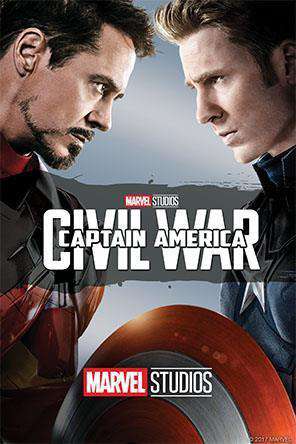 The story is loosely based on the Civil War event in Marvel Comics, in which Steve Rogers (Captain America) and Tony Stark (Iron Man) find themselves on opposing sides as to whether or not superheroes should work under the supervision of the government. It starts with a group of younger superheroes whose escapades lead to the destruction of a school that gets Stark asking the question about whether or not superheroes should register with the government, while Rogers believes such attempts are going to lead to more conflict than expected, especially when he becomes a fugitive, wanted by the government for refusing to register.
The comic book event drew mixed reviews from readers, with critics arguing that Stark is unlikeable and the events aren't wrapped up well. Naturally, there was some skepticism about the MCU creative staff deciding to adapt the Civil War storyline for the MCU.
The way directors Anthony and Joe Russo crafted the storyline, though, it's a storyline that works quite well, particularly because nobody is put entirely in the right throughout the course of events.
It starts with Rogers leading a mission in Lagos that results in the death of members of a Wakanda missionary group and continues with Stark feeling guilty about how The Avengers taking down Ultron resulted in the deaths of many innocents in Sokovia. But each, over time, has had their views changed as a result of other events around them. Rogers, who at one time believed it was important to follow orders, has become skeptical of such oversight after those he has worked for were revealed to have bigger agendas. Stark, who followed his own mind to the point that it made him reckless and his innovations caused more harm than good, now believes that oversight is a good thing.
The opposing viewpoints of whether or not oversight for superheroes is ideal sets the conflict for the film. The United Nations has put together accords that will require The Avengers to work under the supervision of the UN. Stark is willing to support it because of the collateral damage The Avengers have caused, while Rogers opposes it because he knows that governments have agendas and what happens if The Avengers believe they need to take action and said government disagree?
Every superhero is incorporated has his or her own reasons for supporting or opposing the idea of working under UN supervision. James "Rhodey" Rhodes is a military veteran and used to working under such supervision, while Vision sees that, as the number of superheroes has increased, so has the number of serious threats and he sees a pattern. Thus, they support Stark and the accords. Wanda Maximoff is hesitant, given that her mistakes were what caused the death of Wakandans in Lagos, but doesn't want to be constrained more than necessary. Natasha Romanov holds some regret for her past actions and thinks some restraint may be in order, but she remains sympathetic to Rogers. Meanwhile, Sam Wilson backs Rogers, having formed a close bond with him.
Events take a turn for the worse when an explosion happens at the UN, taking the life of T'Chaka, the king of Wakanda, and his son, T'Challa, wants vengeance against the man thought to be responsible, Bucky Barnes, aka The Winter Soldier. In reality, it's Helmut Zemo, a military colonel from Sokovia, who is manipulating events with the intent of putting The Avengers on a collision course with each other.
The overarching theme about oversight and how much control should be put into place over somebody or something is evident throughout society, and not in every case is it evident upon first glance whether or not more oversight or less oversight is the better option.
 Add to this the fact that it's not always possible to support what each character goes through in the course of events. Steve Rogers wants to protect Bucky at all costs, even knowing about the people Bucky has killed. Tony Stark has second thoughts about working under the UN, but his ego gets the best of him and he seems determined to prove he's right no matter what. Regardless of whether or not one believes oversight for super-powered beings is important, there's never a moment in which viewers are told that either Rogers or Stark is right about everything.
In other words, a political theme is handled exactly the way it needs to be -- it reveals that politics involves complex issues and answers aren't always easily reached. Nobody is declared to be the one who got everything right and viewers are left to ask difficult questions on certain aspects.
There are characters, though, in which it's easier to sort out motives. T'Challa is easily relatable -- his father was killed and he wants to avenge his father's death. During the course of events, though, he realizes the dangers of getting caught up in vengeance and chooses to seek a different path. Zemo is a character who one can empathize with -- who couldn't relate to the ideas of losing loved ones and those deemed responsible receive no comeuppance -- but Zemo's methods of seeking vengeance cost other innocent lives and give us an appropriate antagonist, in which we may agree with his principles, but we can't support his methods.
Civil War may be one of the best examples of political themes explored in a movie to date. Though you may find one character or two in which it's hard to argue the person isn't right or wrong, it's not so easily done with the bulk of the characters. And when it comes to most political issues, the truth is that determining what is really right or wrong is not so easily done.
The story is loosely based on the Civil War event in Marvel Comics, in which Steve Rogers (Captain America) and Tony Stark (Iron Man) find themselves on opposing sides as to whether or not superheroes should work under the supervision of the government. It starts with a group of younger superheroes whose escapades lead to the destruction of a school that gets Stark asking the question about whether or not superheroes should register with the government, while Rogers believes such attempts are going to lead to more conflict than expected, especially when he becomes a fugitive, wanted by the government for refusing to register.The comic book event drew mixed reviews from readers, with critics arguing that Stark is unlikeable and the events aren't wrapped up well. Naturally, there was some skepticism about the MCU creative staff deciding to adapt the Civil War storyline for the MCU.
The way directors Anthony and Joe Russo crafted the storyline, though, it's a storyline that works quite well, particularly because nobody is put entirely in the right throughout the course of events.
It starts with Rogers leading a mission in Lagos that results in the death of members of a Wakanda missionary group and continues with Stark feeling guilty about how The Avengers taking down Ultron resulted in the deaths of many innocents in Sokovia. But each, over time, has had their views changed as a result of other events around them. Rogers, who at one time believed it was important to follow orders, has become skeptical of such oversight after those he has worked for were revealed to have bigger agendas. Stark, who followed his own mind to the point that it made him reckless and his innovations caused more harm than good, now believes that oversight is a good thing.
The opposing viewpoints of whether or not oversight for superheroes is ideal sets the conflict for the film. The United Nations has put together accords that will require The Avengers to work under the supervision of the UN. Stark is willing to support it because of the collateral damage The Avengers have caused, while Rogers opposes it because he knows that governments have agendas and what happens if The Avengers believe they need to take action and said government disagree?
Every superhero is incorporated has his or her own reasons for supporting or opposing the idea of working under UN supervision. James "Rhodey" Rhodes is a military veteran and used to working under such supervision, while Vision sees that, as the number of superheroes has increased, so has the number of serious threats and he sees a pattern. Thus, they support Stark and the accords. Wanda Maximoff is hesitant, given that her mistakes were what caused the death of Wakandans in Lagos, but doesn't want to be constrained more than necessary. Natasha Romanov holds some regret for her past actions and thinks some restraint may be in order, but she remains sympathetic to Rogers. Meanwhile, Sam Wilson backs Rogers, having formed a close bond with him.
Events take a turn for the worse when an explosion happens at the UN, taking the life of T'Chaka, the king of Wakanda, and his son, T'Challa, wants vengeance against the man thought to be responsible, Bucky Barnes, aka The Winter Soldier. In reality, it's Helmut Zemo, a military colonel from Sokovia, who is manipulating events with the intent of putting The Avengers on a collision course with each other.
The overarching theme about oversight and how much control should be put into place over somebody or something is evident throughout society, and not in every case is it evident upon first glance whether or not more oversight or less oversight is the better option.
Add to this the fact that it's not always possible to support what each character goes through in the course of events. Steve Rogers wants to protect Bucky at all costs, even knowing about the people Bucky has killed. Tony Stark has second thoughts about working under the UN, but his ego gets the best of him and he seems determined to prove he's right no matter what. Regardless of whether or not one believes oversight for super-powered beings is important, there's never a moment in which viewers are told that either Rogers or Stark is right about everything.In other words, a political theme is handled exactly the way it needs to be -- it reveals that politics involves complex issues and answers aren't always easily reached. Nobody is declared to be the one who got everything right and viewers are left to ask difficult questions on certain aspects.
There are characters, though, in which it's easier to sort out motives. T'Challa is easily relatable -- his father was killed and he wants to avenge his father's death. During the course of events, though, he realizes the dangers of getting caught up in vengeance and chooses to seek a different path. Zemo is a character who one can empathize with -- who couldn't relate to the ideas of losing loved ones and those deemed responsible receive no comeuppance -- but Zemo's methods of seeking vengeance cost other innocent lives and give us an appropriate antagonist, in which we may agree with his principles, but we can't support his methods.
Civil War may be one of the best examples of political themes explored in a movie to date. Though you may find one character or two in which it's hard to argue the person isn't right or wrong, it's not so easily done with the bulk of the characters. And when it comes to most political issues, the truth is that determining what is really right or wrong is not so easily done.
Friday, February 23, 2018
Arrowverse 'Other World' Chapter 2 - Canary
Disclaimer: This is the second chapter in a story about an "other world" based on the Arrowverse, the CW shows that focus on DC superheroes. I am writing this as my way of paying homage to my fandom for the Arrowverse. The character names Supergirl, Green Arrow, The Flash, Canary and Brainiac are trademarks of DC Comics. These chapters are free to read, they will not be published in book format, nor will any revenue be generated from the chapters. If there are legal issues involved with the usage of these characters, please email me at bwmorris at mail dot com and I will cease with the writing. Critiquing of my writing is welcomed and may be left in the comments.
Sunday, February 18, 2018
Political Themes: The Hunger Games
The Hunger Games was released nearly 10 years ago and led off one of the best selling trilogies in recent years, with the three books in the series having sold more than 65 million copies. It led to a popular series of films based on the books and happened to be one of the works that inspired my own writing.
The Hunger Games series also happens to feature a number of political themes, though they may not be obvious upon first glance.
 After all, the prevailing storyline surrounding The Hunger Games series is 12 districts in the nation of Panem each having to send one boy and one girl, each 12 to 17 years old, as "tributes" to participate in a battle to the death, from which only one may survive. Katniss Everdeen, the chief protagonist of the series, only volunteers to be a tribute because she wants to protect her sister, whose name was drawn to be said tribute. Along the way, she finds herself becoming the unwilling symbol of a rebellion against the Capitol, all while caught in a love triangle with her longtime friend Gale Hawthorne and fellow tribute Peeta Mallark.
But at the heart of The Hunger Games is class warfare, illustrated in terms of how the citizens are divided into districts. The residents of the Capitol are the elite of the society, decadent to the point of wasting food, speak in a different accent than district residents and have a taste for exotic fashions. But even with the Hunger Games themselves being a bloody spectacle, most of the Capitol residents become emotionally invested in the tributes.
And the districts themselves each serve a specific industry or specialty. Districts 1, 2 and 4 are dubbed the Capitol's "lapdogs" by most of the other districts. District 1 creates luxury goods, District 2 specializes in masonry and military and District 4 focuses on fishing and seafood. In the cases of Districts 1 and 4, the nature of the goods that are produced makes those districts favored above others. And because District 2 is where the military force of Panem, the Peacekeepers, are trained, it also holds special favor with the Capitol. In modern terms, you would think of District 1 as the arts, District 2 as the troops and police and District 4 as higher-end food.
District 3, which specializes in electronics, isn't considered a favored district but is implied to be on the higher end of the economic scale, along with 1, 2 and 4. The rest of the districts are considered poor, with District 5 specializing in hydroelectric power, District 6 in transportation, District 7 in lumber, District 8 in textiles, District 9 in grain, District 10 in livestock, District 11 in fruits and vegetables and District 12 in coal. As you'll notice, the bulk of the districts on the lower end of the economic scale are associated with rural industries.
In fact, another way to look at District 12 -- where Katniss Everdeen lives -- is that it specializes in goods that, in today's world, are associated with Trump voters!
Seriously, the fact is that coal mining doesn't have a good reputation among much of the elite today. And the parallels between District 12 in Panem and coal-mining towns today are pretty striking. They are both at the lower end of the economic scale, they find themselves neglected by the elite and they grow suspicious of them. In District 12, Peacekeepers look the other way when it comes to black markets and hunting activities that are illegal.
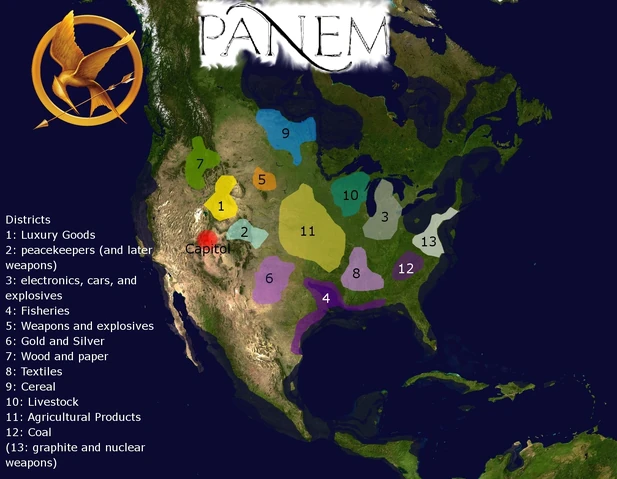 But there's more class divide than just between the Capitol and the districts themselves. Within the districts, those who hold the government positions or run the shops tend to be a little better off than those who do the laboring for the local industries. Within the Capitol itself, it's revealed that those who live on the fringes tend not to be as favored or well off as those who live toward the center. And there are a number of shops that are located far away from the main streets, where people who used to hold special favor from the Capitol are stuck working because they're no longer considered useful.
Class divide is all around throughout Panem, so it's no surprise that there is resentment building against President Cornelius Snow, who rules over Panem and lives in, by far, the largest and most luxurious of the mansions. The Hunger Games themselves are certainly not popular among most of the districts -- even with Districts 1, 2 and 4 training kids to become "Career tributes" -- but what makes Snow and the Capitol just as unpopular are the living conditions in most of the districts. The only district that is slow to come around to the eventual rebellion is District 2, namely because it houses the military operations and its residents tend to be fiercely loyal to the Capitol.
But author Suzanne Collins presents class divide in a means that people can relate to. Few, if any, people would approve of a spectacle in which people are forced to send children and teenagers into an arena to fight to the death. The totalitarian rule throughout Panem would make a lot of people suspicious. And while Katniss Everdeen makes it no secret she dislikes the way things are in Panem, her interests lie more in protecting her sister, rather than wanting to embrace a political cause. Most people are like this -- they would first strive to protect those that they are close to before engaging in political action.
Another political theme throughout the books is the usage of propaganda to advance a cause. This is first evident in how the Capitol plays up The Hunger Games as an event that has brought the people of Panem together and how tributes are coached up to present themselves as somebody the Capitol residents should root for. It is utilized by President Snow as a means of trying to keep the districts in line when tensions start to rise. And it is ultimately used by Alma Coin, president of the supposedly destroyed District 13, which has been secretly building its military reserves for a rebellion.
 But what makes propaganda an effective political theme is that it doesn't always have to be political. Propaganda makes its way into how the tributes present themselves, in how they find ways to manipulate Capitol residents into rooting for them and a willingness to send gifts to the tributes when they are fighting in the arena. Compare this to how businesses advertise and promote products -- or even how an author promotes his or her books!
And alongside the political themes, there are themes that don't dive into the political realm. A big one is how people can find themselves developing relationships with others when they might not otherwise do so. Katniss Everdeen finds it hard to trust people, thanks in large part to her father dying while working in the coal mines and her mother becoming withdrawn after that. Katniss only finds comfort in her sister Primrose, though she later finds additional comfort in Gale. But there are a host of others who she is initially cold towards.
It's part of what keeps Katniss from being a likable character in every way at first. There are plenty of reasons for readers to empathize with her and, to a degree, sympathize with her. But some people may find her attitude rubbing them the wrong way. In the first book, after Peeta's father gives her some cookies, she throws them away after suspecting Peeta is doing nothing more than sucking up to District 12's tribute mentor, Haymitch Abernathy. That's not exactly the type of gesture you would think of when you want a hero to root for.
Over time, though, Katniss finds more people she connects with and, for those who she doesn't connect with at first, she learns to do so. This is how Katniss is transformed from a character people will empathize with at first, to sympathizing with as the books progress. Katniss is far from the perfect individual with no flaws whatsoever -- and, at times, may engage in actions people don't agree with. It's the type of protagonist that is much easier to relate to, rather than being a one-dimensional character who is said to always be right.
That brings us to the main antagonist, President Snow. He does hold a valid point about why he does what he does -- the nation before Panem was involved in a great war and he believes this structure must be kept in place to ensure the survival of the human race. But while the survival of the human race is a point people can empathize with, there is never a moment in which President Snow is a sympathetic character. His actions are, in many cases, impossible to defend. That is what keeps people rooting for Katniss to prevail.
The trilogy concludes with Panem taking on new leadership, though it remains to be seen how the new government will take shape and what it means for the citizens. It does provide a degree of hope, mostly for Katniss moving on to a stable relationship with Peeta and, eventually, having children -- something Katniss swore she would never do because of the Hunger Games.
But what The Hunger Games series doesn't do is provide easy answers to those political questions it raises. It only addresses the issue that certain methods will not be accepted -- namely that the Hunger Games are no more. The rest is left up for readers to decide where things will go and if Panem's leadership will show people a better path. It's best summarized in what Plutarch Heavensbee tells Katniss Everdeen after leadership matters in Panem are settled.
That's a question people should always ask themselves after what's considered to be a terrible regime is removed from power -- are we going to remember those horrors and not repeat our mistakes? Or will humanity fall victim to its weaknesses again?
The Hunger Games series also happens to feature a number of political themes, though they may not be obvious upon first glance.
After all, the prevailing storyline surrounding The Hunger Games series is 12 districts in the nation of Panem each having to send one boy and one girl, each 12 to 17 years old, as "tributes" to participate in a battle to the death, from which only one may survive. Katniss Everdeen, the chief protagonist of the series, only volunteers to be a tribute because she wants to protect her sister, whose name was drawn to be said tribute. Along the way, she finds herself becoming the unwilling symbol of a rebellion against the Capitol, all while caught in a love triangle with her longtime friend Gale Hawthorne and fellow tribute Peeta Mallark.But at the heart of The Hunger Games is class warfare, illustrated in terms of how the citizens are divided into districts. The residents of the Capitol are the elite of the society, decadent to the point of wasting food, speak in a different accent than district residents and have a taste for exotic fashions. But even with the Hunger Games themselves being a bloody spectacle, most of the Capitol residents become emotionally invested in the tributes.
And the districts themselves each serve a specific industry or specialty. Districts 1, 2 and 4 are dubbed the Capitol's "lapdogs" by most of the other districts. District 1 creates luxury goods, District 2 specializes in masonry and military and District 4 focuses on fishing and seafood. In the cases of Districts 1 and 4, the nature of the goods that are produced makes those districts favored above others. And because District 2 is where the military force of Panem, the Peacekeepers, are trained, it also holds special favor with the Capitol. In modern terms, you would think of District 1 as the arts, District 2 as the troops and police and District 4 as higher-end food.
District 3, which specializes in electronics, isn't considered a favored district but is implied to be on the higher end of the economic scale, along with 1, 2 and 4. The rest of the districts are considered poor, with District 5 specializing in hydroelectric power, District 6 in transportation, District 7 in lumber, District 8 in textiles, District 9 in grain, District 10 in livestock, District 11 in fruits and vegetables and District 12 in coal. As you'll notice, the bulk of the districts on the lower end of the economic scale are associated with rural industries.
In fact, another way to look at District 12 -- where Katniss Everdeen lives -- is that it specializes in goods that, in today's world, are associated with Trump voters!
Seriously, the fact is that coal mining doesn't have a good reputation among much of the elite today. And the parallels between District 12 in Panem and coal-mining towns today are pretty striking. They are both at the lower end of the economic scale, they find themselves neglected by the elite and they grow suspicious of them. In District 12, Peacekeepers look the other way when it comes to black markets and hunting activities that are illegal.
But there's more class divide than just between the Capitol and the districts themselves. Within the districts, those who hold the government positions or run the shops tend to be a little better off than those who do the laboring for the local industries. Within the Capitol itself, it's revealed that those who live on the fringes tend not to be as favored or well off as those who live toward the center. And there are a number of shops that are located far away from the main streets, where people who used to hold special favor from the Capitol are stuck working because they're no longer considered useful.Class divide is all around throughout Panem, so it's no surprise that there is resentment building against President Cornelius Snow, who rules over Panem and lives in, by far, the largest and most luxurious of the mansions. The Hunger Games themselves are certainly not popular among most of the districts -- even with Districts 1, 2 and 4 training kids to become "Career tributes" -- but what makes Snow and the Capitol just as unpopular are the living conditions in most of the districts. The only district that is slow to come around to the eventual rebellion is District 2, namely because it houses the military operations and its residents tend to be fiercely loyal to the Capitol.
But author Suzanne Collins presents class divide in a means that people can relate to. Few, if any, people would approve of a spectacle in which people are forced to send children and teenagers into an arena to fight to the death. The totalitarian rule throughout Panem would make a lot of people suspicious. And while Katniss Everdeen makes it no secret she dislikes the way things are in Panem, her interests lie more in protecting her sister, rather than wanting to embrace a political cause. Most people are like this -- they would first strive to protect those that they are close to before engaging in political action.
Another political theme throughout the books is the usage of propaganda to advance a cause. This is first evident in how the Capitol plays up The Hunger Games as an event that has brought the people of Panem together and how tributes are coached up to present themselves as somebody the Capitol residents should root for. It is utilized by President Snow as a means of trying to keep the districts in line when tensions start to rise. And it is ultimately used by Alma Coin, president of the supposedly destroyed District 13, which has been secretly building its military reserves for a rebellion.
But what makes propaganda an effective political theme is that it doesn't always have to be political. Propaganda makes its way into how the tributes present themselves, in how they find ways to manipulate Capitol residents into rooting for them and a willingness to send gifts to the tributes when they are fighting in the arena. Compare this to how businesses advertise and promote products -- or even how an author promotes his or her books!And alongside the political themes, there are themes that don't dive into the political realm. A big one is how people can find themselves developing relationships with others when they might not otherwise do so. Katniss Everdeen finds it hard to trust people, thanks in large part to her father dying while working in the coal mines and her mother becoming withdrawn after that. Katniss only finds comfort in her sister Primrose, though she later finds additional comfort in Gale. But there are a host of others who she is initially cold towards.
It's part of what keeps Katniss from being a likable character in every way at first. There are plenty of reasons for readers to empathize with her and, to a degree, sympathize with her. But some people may find her attitude rubbing them the wrong way. In the first book, after Peeta's father gives her some cookies, she throws them away after suspecting Peeta is doing nothing more than sucking up to District 12's tribute mentor, Haymitch Abernathy. That's not exactly the type of gesture you would think of when you want a hero to root for.
Over time, though, Katniss finds more people she connects with and, for those who she doesn't connect with at first, she learns to do so. This is how Katniss is transformed from a character people will empathize with at first, to sympathizing with as the books progress. Katniss is far from the perfect individual with no flaws whatsoever -- and, at times, may engage in actions people don't agree with. It's the type of protagonist that is much easier to relate to, rather than being a one-dimensional character who is said to always be right.
That brings us to the main antagonist, President Snow. He does hold a valid point about why he does what he does -- the nation before Panem was involved in a great war and he believes this structure must be kept in place to ensure the survival of the human race. But while the survival of the human race is a point people can empathize with, there is never a moment in which President Snow is a sympathetic character. His actions are, in many cases, impossible to defend. That is what keeps people rooting for Katniss to prevail.
The trilogy concludes with Panem taking on new leadership, though it remains to be seen how the new government will take shape and what it means for the citizens. It does provide a degree of hope, mostly for Katniss moving on to a stable relationship with Peeta and, eventually, having children -- something Katniss swore she would never do because of the Hunger Games.
But what The Hunger Games series doesn't do is provide easy answers to those political questions it raises. It only addresses the issue that certain methods will not be accepted -- namely that the Hunger Games are no more. The rest is left up for readers to decide where things will go and if Panem's leadership will show people a better path. It's best summarized in what Plutarch Heavensbee tells Katniss Everdeen after leadership matters in Panem are settled.
"Now we're in that sweet period where everyone agrees that our recent horrors should never be repeated. But collective thinking is usually short-lived. We're fickle, stupid beings with poor memories and a great gift for self-destruction. Although who knows? Maybe this will be it, Katniss."
That's a question people should always ask themselves after what's considered to be a terrible regime is removed from power -- are we going to remember those horrors and not repeat our mistakes? Or will humanity fall victim to its weaknesses again?
Wednesday, February 14, 2018
Arrowverse 'Other World' Chapter 1 - Supergirl
Disclaimer: This is the first chapter in a story about an "other world" based on the Arrowverse, the CW shows that focus on DC superheroes. I am writing this as my way of paying homage to my fandom for the Arrowverse. The character names Supergirl, Green Arrow, The Flash, Canary and Brainiac are trademarks of DC Comics. These chapters are free to read, they will not be published in book format, nor will any revenue be generated from the chapters. If there are legal issues involved with the usage of these characters, please email me at bwmorris at mail dot com and I will cease with the writing. Critiquing of my writing is welcomed and may be left in the comments.
Subscribe to:
Posts (Atom)