Valerie Noble's The Energy Crusades explores a relevant theme in today's society: the value of energy sources and how they impact our lives. In Noble's book, energy is the only currency and visitors from another planet come to Earth with ideas about how to save it, but the question is whether those visitors have Earth's best interests in mind or if they have a bigger agenda.
The book focuses on Kaia, a young girl considered one of the best students, who trains for her own Energy Crusade, one in which she is reunited with childhood friend Ajax. Along the way, though, she learns more about what the Crusades are really about, along with exploring questions about her own past and whether the people she thought had her best interests in mind can be trusted.
Noble's greatest strength is her world building. She certainly had a lot of ideas in mind for how this future world would take shape and how the role of energy sources in society could have a greater impact over time. She takes her time to introduce new elements into the story and does a good job of pacing them throughout the book. And Noble's love of tennis is evident throughout the story!
I did find some of the shifts in viewpoint to be a bit jarring at times. I find the novel works best when told through the eyes of Kaia. Some of the characters whose viewpoint Noble chooses to use are ones I didn't find myself relating to as well.
But those weaknesses are more than made up with Noble's strengths in building a world, her knowledge about energy resources coming through in her writing, and making Kaia a complex and relatable character.
The Energy Crusades is the first book in a planned series. Noble has already released the second book, The City in the Mountains.
You can learn more about The Energy Crusades at Noble's website or order the book through Amazon.
Sunday, February 26, 2017

Sunday, February 19, 2017
Three YA Thumbnail Reviews
As I've been working on the second book in my planned series, I've read a number of young adult titles in recent months to get ideas on how to make characters relatable and the situations they face.
It also gives me a good reason to read more books, a requirement for anybody who wants to get better at writing.
I'll do a few thumbnail reviews of some of the books that I've read in recent weeks and look at what I thought each author did well.
The Eye of Minds: James Dashner's first book in his Morality Doctrine series focuses on a young gamer named Michael who is tasked with tracking down a rogue hacker named Kaine who is causing mass destruction and death in the VirtNet. Dashner does a good job with world building, using the virtual reality concept to create many different settings and put Michael and other characters through different challenges. Dashner is also good at building tension throughout the novel. The ending was a bit unexpected.
The Infinite Sea: The sequel to The 5th Wave, a book I enjoyed. Once again, Rick Yancey narrates through several different characters in a first-person viewpoint, with a few instances of third-person viewpoint. It was kind of jarring, though, to be thrust into the mind of Ringer to start the book -- she was a minor character in The 5th Wave. I thought the book worked better when told through the viewpoint of Cassie and was disappointed I didn't get much insight from Ben, whose viewpoint was shared frequently in the first book. After a strong first book, the second book was a bit disappointing.
H2O: The debut novel by Virginia Bergin, in which Ruby, a teenage girl from England, tries to survive amidst a lethal rainfall that has left most sources of water unsafe to drink. Bergin's biggest strength is the voice she gives to Ruby... there's no question you're dealing with a teeanger who's desperate for company and really wants to find her father. You do have to get used to Bergin's decision to use all caps at certain points, but it does give the impression of a teenager writing in a diary and getting upset at certain points. The ending came off a bit flat, though.
There are some other novels that I read from my fellow Clean Reads authors, but I'll try to sit down and do more detailed reviews of those in the weeks to come.
It also gives me a good reason to read more books, a requirement for anybody who wants to get better at writing.
I'll do a few thumbnail reviews of some of the books that I've read in recent weeks and look at what I thought each author did well.
The Eye of Minds: James Dashner's first book in his Morality Doctrine series focuses on a young gamer named Michael who is tasked with tracking down a rogue hacker named Kaine who is causing mass destruction and death in the VirtNet. Dashner does a good job with world building, using the virtual reality concept to create many different settings and put Michael and other characters through different challenges. Dashner is also good at building tension throughout the novel. The ending was a bit unexpected.
The Infinite Sea: The sequel to The 5th Wave, a book I enjoyed. Once again, Rick Yancey narrates through several different characters in a first-person viewpoint, with a few instances of third-person viewpoint. It was kind of jarring, though, to be thrust into the mind of Ringer to start the book -- she was a minor character in The 5th Wave. I thought the book worked better when told through the viewpoint of Cassie and was disappointed I didn't get much insight from Ben, whose viewpoint was shared frequently in the first book. After a strong first book, the second book was a bit disappointing.
H2O: The debut novel by Virginia Bergin, in which Ruby, a teenage girl from England, tries to survive amidst a lethal rainfall that has left most sources of water unsafe to drink. Bergin's biggest strength is the voice she gives to Ruby... there's no question you're dealing with a teeanger who's desperate for company and really wants to find her father. You do have to get used to Bergin's decision to use all caps at certain points, but it does give the impression of a teenager writing in a diary and getting upset at certain points. The ending came off a bit flat, though.
There are some other novels that I read from my fellow Clean Reads authors, but I'll try to sit down and do more detailed reviews of those in the weeks to come.
Sunday, February 12, 2017
Writing Inspirations: Suzanne Collins
When I started this blog, I wrote about four people who inspired my writing but forgot to write about a fifth... that person is who you might say put my book idea over the top.
My first experience with The Hunger Games was watching the movie, which I enjoyed. But it wasn't until I ran across the book that I became hooked on the franchise, thanks to the writing style of Suzanne Collins.
I loved the story that Collins set up, how she built tension, the voice she gave Katniss Everdeen, how good Collins was in making me sympathize not only with Katniss, but several other characters, too. Collins did a good job portraying Peeta and gave you just enough about Gale and Prim to make you empathize with those two characters.
The first time I read The Hunger Games, I had trouble putting it down. That's a testament to her ability to build suspense and intrigue. She seems to know the right spot to end a chapter and make you want to keep moving to the next one.
Just as importantly, Collins' book helped inspire my upcoming novel, Six Pack: Emergence. I had been toying with the idea of a superhero team-up for a long time, but didn't know what setting to utilize. Collins inspired me to add that missing layer to my book idea... the idea of a dystopian world.
The Hunger Games series are the only books by Collins that I have read thus far (which means I have some material to put on my reading list, right?) but if I hadn't ran across her books and only experienced the movies, I might never had found the right setting and storyline to place my characters.
Of course, now that I have completed the first novel and have the second one well underway, I've got ideas for other books running through my head. Who knows if I would have ventured down this path had I not read Collins' works?
(If you'd like to read about the other writing inspirations for my book, you can learn more at these links: Greg Weisman, George Orwell, Stan Lee, Conor Friedersdorf.)
My first experience with The Hunger Games was watching the movie, which I enjoyed. But it wasn't until I ran across the book that I became hooked on the franchise, thanks to the writing style of Suzanne Collins.
I loved the story that Collins set up, how she built tension, the voice she gave Katniss Everdeen, how good Collins was in making me sympathize not only with Katniss, but several other characters, too. Collins did a good job portraying Peeta and gave you just enough about Gale and Prim to make you empathize with those two characters.
The first time I read The Hunger Games, I had trouble putting it down. That's a testament to her ability to build suspense and intrigue. She seems to know the right spot to end a chapter and make you want to keep moving to the next one.
Just as importantly, Collins' book helped inspire my upcoming novel, Six Pack: Emergence. I had been toying with the idea of a superhero team-up for a long time, but didn't know what setting to utilize. Collins inspired me to add that missing layer to my book idea... the idea of a dystopian world.
The Hunger Games series are the only books by Collins that I have read thus far (which means I have some material to put on my reading list, right?) but if I hadn't ran across her books and only experienced the movies, I might never had found the right setting and storyline to place my characters.
Of course, now that I have completed the first novel and have the second one well underway, I've got ideas for other books running through my head. Who knows if I would have ventured down this path had I not read Collins' works?
(If you'd like to read about the other writing inspirations for my book, you can learn more at these links: Greg Weisman, George Orwell, Stan Lee, Conor Friedersdorf.)
Sunday, February 5, 2017
Twenty Questions With Sara Turnquist
This week’s Twenty Questions session is with Sara
Turnquist, who has written four books and her most recent release is “Hope in
Cripple Creek.” You may visit her website here to learn more about her other
released novels and several others she is working on.
Anyone who is interested in participating in a
Twenty Questions session with me to promote their recent or upcoming releases
may learn more here.
So everyone say hello to Sara Turnquist!
1. How did you get interested in writing? I
have always written short stories and little fan fiction for as long as I can
remember. It wasn't until college though that I started writing the story that
would become my second published novel, The General's Wife.
2. What inspired you to come up with ‘Hope in
Cripple Creek’? I always liked historical dramas set during this time period
- right after the civil war and out west. (Think Dr. Quinn, Medicine Woman.)
So, I wanted to set this story I was dreaming up during this place and time. I
asked my husband, who had lived in Colorado for a short time, for the name of a
small town in Colorado. He gave me Cripple Creek. When I started researching
the town, the story of this historically significant miner's strike fell into
my lap. So, the novel is partly about the love story and partly about the main
character's brother who is a miner caught up in this strike. The stories are
interwoven in places. It was really fun to write.

3. Tell me about the main character, Katherine
Matthews, and what inspired you to create her. I wanted to create a
character that had core wounds. And those wounds haunted her. Something she
held on to, but needed to overcome in order to find love. She is a strong
character, and that is part of what keeps her from letting anyone in to help
her heal.
4. What characters, other than Katherine, did you
find enjoyable to write as you progressed with the book? I really enjoyed
writing Wyatt, the town doctor and Katherine's nemesis. You ever have those
times when the character just runs away from you? Starts telling his own story
and you're like, "so that's why you are the way you are"? Well, Wyatt
did that to me. His backstory unfolded that way. It wasn't planned (I'm a
pantser by nature - write by the seat of my pants, letting the story happen as
I write with very little planning), but even less so his background. It
literally came out as I wrote. It surprised me. But, as Robert Frost says
"...no surprise in the writer, no surprise in the reader"
5. What are some of the themes you explored in
writing the novel? That the truth will have the last say. And that the
truth, ultimately, will set you free.
6. What were some of the things you learned along
the way as you wrote and edited the book? I learned a LOT about deep point
of view. I learned a lot about deep POV while I let the manuscript rest. So
when I went back to edit, I was surprised how much editing it required. I
learned to trust the pantser in me. I have become more of a "plantser"
over time (a cross between a plotter and a pantser - I do a lot of character
developing and plotting before I start writing these days). But I learned that
if I let the characters "run with it" that they can take me in some
really interesting places.
7. How did this book writing experience compare
to the other books you have written? The editing journey on this book was
much more intense. Both between the resting of the manuscript and self-editing
and what the professional editors brought to the manuscript. This was the
roughest. Not because it needed the most work, necessarily, because, as the
toughest editor said she "saw a tremendous amount of potential" in
this story.
8. Tell me more about writing historical fiction
and why you love it so much. I am just as surprised as anyone else that I
became a historical fiction/romance writer. History inspires me. The fact that
real life is stranger than fiction sometimes. I love that when the facts get
vague, you add more fiction and when the fiction becomes a bit weaker, you add
more fact. It's a dance. A beautiful dance.
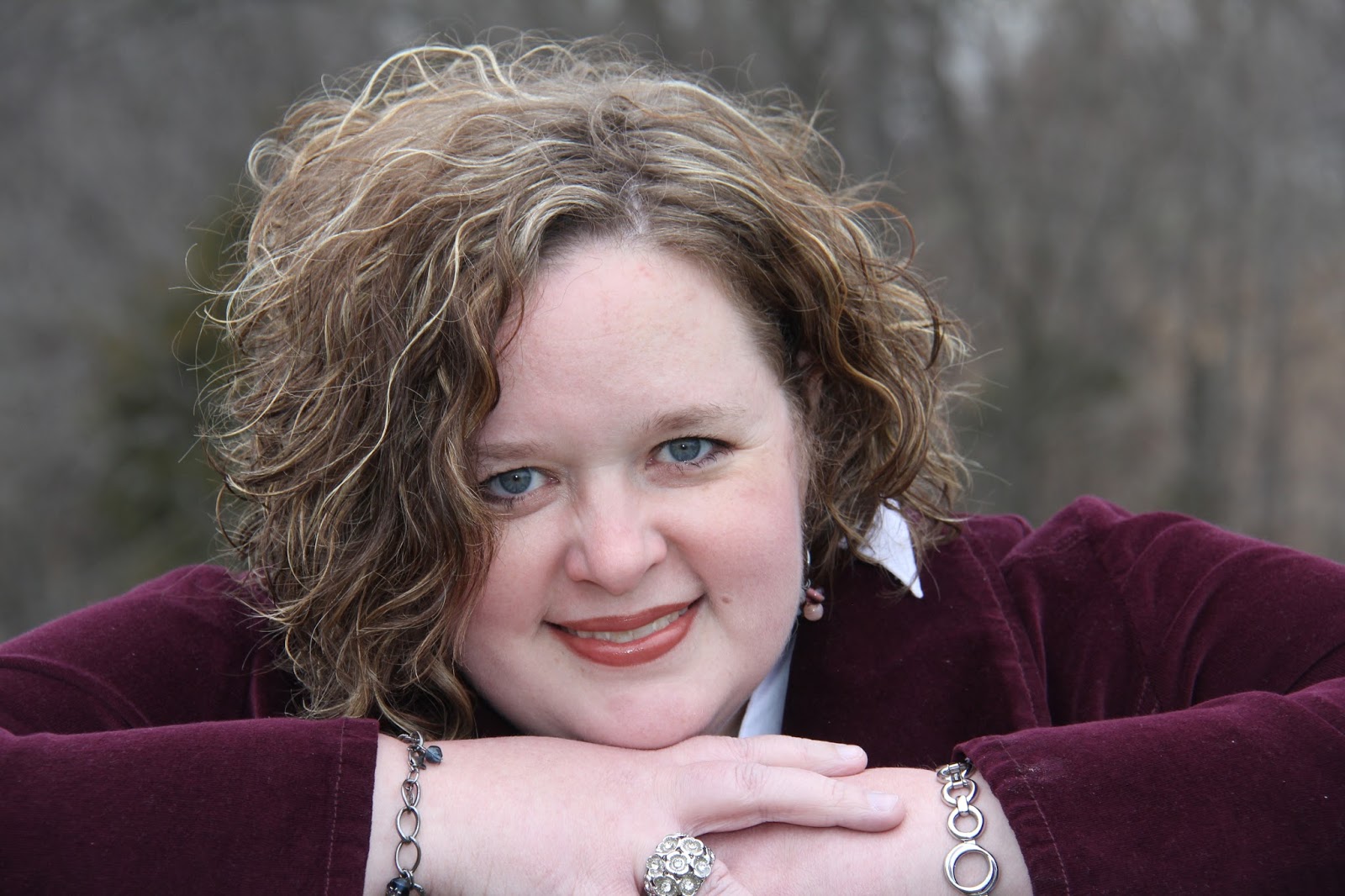
9. What do you find is the right environment for
you to write? I have a wonderful writing space at home. A nice U-shaped desk
with enough space to lay out my research, notes, pictures and whatnot (not as
necessary now that Scrivener keeps all that secure for you). But it's peaceful
and my husband's desk is not far away. So, I can share scenes with him after I
write them and get that instant feedback. But I find I am more productive at
the local coffee shop. They have some really comfy booths that allow me the
space to spread my stuff out, plug into my music (I have to have that!) and tap
away the keyboard.
10. Are there specific programs or tools you find
useful to help you with the writing process? I LOVE Scrivener. I love the
way it lays out your book in the Binder. And I love the COMPOSE mode, how it
blocks out your desktop and you can upload a photo as your backdrop. I pick a
photo themed to my story to inspire my creative juices.
11. What have you found to be useful methods for
promoting your writing? Going to conferences, regular posting on social
media, blog tours (in which the blogs are targeted to your genre), posting
memes in targeted Facebook groups, basically, know your audience and go where
they are
12. What are some of the famous books or authors
you have enjoyed or inspired you? Michelle Moran writes Historical Fiction
and I have enjoyed how detailed she is. Francine Rivers' stories have really
inspired me on a number of levels.
13. Any aspiring or independent authors whose
books you’ve read that you liked and want to mention to others to check
out? I am loving Melanie Dickerson and Tamara Leigh's books right now.
They are both clean Historical Romance authors. I love the way they draw you in
and their well-developed characters. Joanne Bischof is amazing with deep point
of view.
14. What advice would you give to those who want
to write a novel before they actually get started? Have determination. You
are not going to feel like writing on certain days. Sometimes the
muse/inspiration isn't there. But if you are serious about the craft, you are
going to have to dedicate yourself to finding that inspiration anyway. Just sit
down and start writing. Search for a writing prompt if you have to and write
about something that is not relevant to your work. Get the pump primed. You'll
be surprised how quickly those creative juices will start to flow once you just
get writing. You have to have that determination. No one is going to care about
your career like you will.
15. Tell me about your work at the Orlando zoo.
What’s involved with your work as an educator there? Mostly it's educational
tours/classes. For children, there are classes about the animals. The
elementary children, for example, go through the zoo and learn about how the
different animals use their bodies, their behaviors, and their habitats to help
them survive. They, too, play the part of an animal group trying to survive.
For the adults, it's more of a tour - getting a chance to see "behind the
scenes" - an animal night house, the vet hospital, the nutrition center
(where the animal's diets are prepared), etc.
16. In your bio, you mentioned working as a sleep
technician. Are you still doing that? What’s involved with that job? Sadly,
I am no longer involved with that. Sleep technicians "hook" patients
up for sleep studies (attach wires so that the patient's brain waves,
breathing, heart, and muscles can be monitored while they sleep to determine if
there is a sleep disorder). Then the sleep technician watches the data and
makes sure the patient is safe during the study. I did that for a while, then I
transferred over to the analytical side of things. I was one of the technicians
that took the data and analyzed it for the doctor to "read" it and
make his/her diagnosis.
17. What can you tell me about your experiences
visiting the Czech Republic? That sounds interesting! I could talk about my
visits to the Czech Republic forever. They had a tremendous impact on me. I
loved the culture, the people, the country, the history, you name it! I went
several summers to teach English at a summer camp for college aged students. We
spent time in Prague, but the camps were held in the Krkonose Mountains. I
would go back in a heartbeat. And plan to when my kiddos are a bit older.
18. Tell me about these other creative outlets
you pursue… is there a particular favorite you have? I love music (I sing
and play the piano and the flute), painting, scrapbooking, and acting/drama. It
is difficult to chose a favorite. Perhaps playing the piano is the most
cathartic.
19. Have any of your children followed in your
footsteps with a love for writing? My kiddos are 7, 5, and 3. The older two
LOVE to read. And I have hopes that they will enjoy writing. My 5 year old
already loves to tell looooong stories to avoid bedtime. So, we'll see :-)
20. Who would win a battle of superhero skills:
Superman, Batman or Wonder Woman? Superman can FLY and has super strength
among other amazing talents, Batman has some fancy toys, and Wonder Woman (girl
power) has a magic lasso and a "jet" no one can see. What do you
think?
Sunday, January 29, 2017
Twenty Questions With Mal Smith
This week's Twenty Questions session is with Mal Smith, whose young adult fantasy novel "Black Dawn" will be released through Clean Reads Feb. 14. Here's the details about the novel:

You can follow Mal on Facebook here. If you are interested in doing a Twenty Questions sessions, you can learn more here.
Now let's hear from Mal about herself and her upcoming novel.
1. How did you get interested in writing?
3. Tell me about Emory Fae and what inspired you to create her.

Annie’s Chocolates is my number one!!!! <3
20. Who would win a battle of superhero skills: Superman, Batman or Wonder Woman?
Emory Fae enjoys leading a quiet, normal life that
is until two mysterious, and dare I say handsome soldiers show up at her
apartment doorstep and the life she knew is instantly whisked away. Coming from
the magical and ravaged world of Kiero, Emory is brought back not realizing
that both men are darkly woven in her past. Discovering she is the long lost
heir to the Royal Line Emory is thrown into Black Dawn Rebellion with a dynamic
role to ignite the rebels and reclaim her throne. With both lives clashing Emory uncovers
hidden secrets from her past, a power held long dormant, and will soon realize
there are worse things than supernatural humans, love, loss, betrayal, and a
Mad King.
Some things are better left in the shadows.

You can follow Mal on Facebook here. If you are interested in doing a Twenty Questions sessions, you can learn more here.
Now let's hear from Mal about herself and her upcoming novel.
1. How did you get interested in writing?
My love for writing developed with my love of
reading. As an avid reader since I was young, I really dove into writing when I
was fourteen when I wrote the original manuscript for Black Dawn. I gifted it to my cousin for her sixteenth birthday,
and then left writing alone for a long time. It wasn’t until a couple of years
ago that I got back into writing again after talking about it with my husband
while we were walking our dogs and after
we had talked for hours about different possibilities, I started it up the next
day. Looking back there are definite influences that flamed this story to life,
my cousin Jess Kovacs (who is also a book blogger, check her out at
https://regularlyreads.com/) who listened
and talked to me for countless hours and years about this story, the world and
the characters. My highschool English teachers, Mr. Steffler who with a heavy
heart I am saddened to say passed away last year, and Mrs. Verrier who still
teaches English at Strathroy District Collegiate Institute. Without these two teachers,
my appreciation and love for the written word wouldn’t be what is it today. My
husband Matt, who pushed me to believe in this story again, and my amazing
family who fueled my love for reading.
There was no looking back for me when I started writing, I love
it!!
2. What inspired you to write 'Black Dawn'?
Black
Dawn, came in many forms at
first but the inspiration came from the characters I imagined in the world. The
original story that I wrote at fourteen had two main characters that I kept,
Emory Fae and Brokk Foster. When I
revisited the story, there were key elements that helped it take shape, I knew
it would deal with modern day Earth, and a world connected to ours, Kiero,
where magic is very much alive. I also knew that Black Dawn Rebellion and the
story behind the Academy and how Emory Fae is connected to that would make up
book one.
From there the world bloomed into life, and at the end of the
day the story to me is one about human nature, about reactions to hard
situations and how these characters would navigate a world that is ridden with
war, to save their family, loved ones, and make choices they believe will earn
a life of freedom. The inspiration for
the series is to stay true to telling all sides of the character’s story,
because like everything there is always two sides.
3. Tell me about Emory Fae and what inspired you to create her.
Emory Fae has always been a character that is very vivid to me. My
imagination created her first above any other character, because even in the
original manuscript she was a relatable heroine, that is flawed. Black Dawn, follows her story and
without giving too much away, when I write her chapters I am always asking myself
what would I do in her shoes? How would I feel, where would my loyalties lay?
Because even though it is a Fantasy, and I deal with humans with supernatural
abilities, they are still human and especially with her character I feel like her
journey is one close to my heart. So it’s hard to say what the exact
inspiration for her was, but her story was one that was waiting in me to be
told.
4. What other characters did you find enjoyable to write as you
progressed with the book?
Oh I love this question!! I absolutely adore writing my
villain!!! Adair Stratton, The Mad King is one character I am in love with. His
story is a complicated one, but again without giving to much away, his
character deals with being in the wrong place at the wrong time, the
consequences of his choice. Adair as a villain also battles with his inner
demons, between man and King, between wanting to be good and being the villain.
Between waging wars for power and to conquer and wars for love. His character
at first I hated, then sympathized and even wanted to root for him at some
points as I write the series, and I hope the reader will have the same
rollercoaster with him as the books continue. I have a super soft spot for
villains in general and wanting to learn their journey and story. (I realized
that this probably developed at a young age and my obsession with the Phantom!
I was never a Raoul girl lol.)
5. What are some of the themes you explored in writing the novel?
The major theme in Black
Dawn, is the fight between “good” and “evil.” The main premise of book one
is the fight between Black Dawn Rebellion and their fight against Adair as King
to try to free Kiero of his madness, and to earn their freedoms. Emory is the
spark to that, but also is the person who makes this theme quite a grey matter
as the story develops.
6. What were some of the things you learned along the way as you
wrote and edited the book?
Oh man, I have learned lots of things! Writing
is one of the most challenging and rewarding things I have ever done. I have
learned to be persistent with writing, to not get discouraged and above
anything else do it because I love it, and do it because I have a story in me
that needs to get to page. I have learned to be patient through all the
drafting stages, because they are important!!! (I was at first not very patient
lol ) As a writer you will rewrite your book many times, and at the end be sick
of reading it so many times but it’s worth it!!! Trust your editor!!! The team
at Clean Reads Publishing is amazing, from the first edit to the final proof
read, they are supportive and I trust them whole heartedly. It’s amazing to me
to see the first draft of Black Dawn, to
the finished product and I feel grateful to be part of an amazing company and
industry!
7. How would you compare this writing experience to other books or stories you have written?
7. How would you compare this writing experience to other books or stories you have written?
This is the first book I have ever gotten professionally published
and written, but as a first experience it has been phenomenal! I love the book
community!
8. What do you find is the right environment for you to write?
My favorite spot to
write is in my room, I face the window right beside my bookshelves, my
dachshunds cuddle me and I have a never-ending supply of coffee!! But honestly
anywhere I can plug into my music is a great spot for me to write.
9. Are there specific programs or tools you find useful to help you with the writing process?
9. Are there specific programs or tools you find useful to help you with the writing process?
Hmm, my most used is
the online thesaurus to search for different words to use in my books. Other
than that, depending on what I’m writing, it would be Google to get all the
research I need for my story, and above all else music!!!
10. What have you found to be useful methods for promoting your writing?
10. What have you found to be useful methods for promoting your writing?

My cousin, Jess Kovacs helped me understand
the different social media tools last year (I’m terrible with technology) and
from that my favorites are now Twitter and Instagram!! I find I can really
connect to people on these platforms, and Instagram is especially my favorite
because I can share more about me as a person and what I do on a day to day
basis, and it’s a great way to connect with the book community!
11. Which authors do you enjoy reading or have inspired your writing?
11. Which authors do you enjoy reading or have inspired your writing?
This is a tough
question, but some of my top favorites include JK Rowling, Laini Taylor, Sara
Raasch, Pierce Brown, Sarah J Maas and Tamora Pierce. Some recent author
discoveries that I can’t get enough of are AG Howard, Alexandra Bracken, Sabaa
Tahir and V.E Schwab.
12. Any aspiring or independent authors whose books you’ve read
that you liked and want to mention to others to check out?
I’m currently reading The Time Thief by Natalia Schellhaas, and it’s amazing!!
Seriously any Outlander fans out there go check it out you won’t be
disappointed!
13. What advice would you give to those who want to write a
novel before they actually get started?
Never give up on your
dream, and if you feel in your heart you want to get the story out and onto
page then do it, and don’t let anyone else tell you differently!!! Also, you
can do it!!! I never thought I would be here now ;)
14. You're a dog groomer, I see. I take it that's your line of
work... what's it like to do that job and what makes it so enjoyable?
I am J So I have been
grooming for five years now, it’s my day job! I’m currently working at
Companions Pet Resort, in London Ontario and it’s amazing, seriously check them out!! It is
a very fun line of work, I love getting to spend my days with dogs, also it is
super rewarding making dogs feel better and spruced up with a new do J It’s my passion and
honestly other than writing I can’t imagine doing anything else J
15. And let's talk about dachshunds... are they your favorite
breed of dog? Any particular reason if so?
I’m so glad you asked
me this!!!!!!!! I LOVE dachshunds, and even though I am dog groomer and love
all breeds of dogs, I am totally biased when it comes to dachshunds, they are
my favorite!!!! My husband and I currently own two, Link and Lola. Lola we
rescued from Canadian Dachshund Rescue, and she is the sweetest senior girl
ever, and Link we got as a puppy right after Lola, he is three now. Honestly
they are the quirkiest, spunkiest, loving and loyal breed, and I can’t imagine
my days without my little guys! (Even though they can be very stubborn… lol )
16. You enjoy hiking... are there particular trails you like or
do you just enjoy finding whatever places you can to explore?
I do! I love hiking in
Pinery Provincial Park, Komoka and in East London there are many awesome trails
that my husband and I go to J
17. What are your favorite places to get coffee?
As a Canadian, my
heart lies with Timmies!!!! I regular the one by my place way too many times in
one day! But also in London Ontario, there is a new coffee shop, 10eighteen, which has quickly become one of my favorites!
They are holding a book signing for me as well there!
18. What are your favorite dessert shops that you have visited?
18. What are your favorite dessert shops that you have visited?
Annie’s Chocolates is my number one!!!! <3
19. Looking at your author page on Facebook, I can tell you like
Benedict Cumberbatch. What are some of your favorite characters that he has
portrayed?
Hahah oh do I ever! (sorry Matt!) Absolutely Sherlock Holmes, he
nails that role!!!! Actually, funny story, I actually have a Benedict
Cumberbatch portrait tattooed on my leg (him as Sherlock), my tattoo artist
Will Smink does an amazing job! Check out his work!
20. Who would win a battle of superhero skills: Superman, Batman or Wonder Woman?
This is a tough question! I have thought about this one ever
since I got your questions, and I have concluded, that in my opinion Batman
would win. With his various gadgets and weapons, Batmobile, anger to rid Gotham
of any threat in respect of his parent’s memory, also he has Robin and Alfred!
Taking all of this into account, I do believe he would win ;)
Sunday, January 22, 2017
Twenty Questions With Pamela Morris
My Twenty Questions session this week is with Pamela Morris, whose most recent release No Rest for the Wicked came out last August. Morris has written six books (three paranormal fiction and three erotica romance) and you can learn more about them at her website pamelamorrisbooks.com.
Twenty Questions is where I talk to authors about their writing and other topics. If you are interested in participating in a session, you can get more details here.
So everyone say hello to Pamela and let's learn more about her work as an author.
1. How did you get interested in writing?
 I have always been interested in writing. When I was nine I wrote and illustrated my first story called "Bill, The Worm Who Ran Away" quickly followed by "The Secret Well", my first mystery! I still have the originals filed away in my archives. In the 3rd grade I realized I may have a problem when our teacher gave us a three page weekend assignment involving our spelling words. Come Monday morning I have a very clear memory of carrying my story up to her desk and being terrified I'd done it wrong. As I handed it over to her I said, "I hope it's okay. I couldn't do three pages. It's ten. The characters just took over on me." The smile on her face was priceless as she said, "No, the minimum was three, this is wonderful."
2. What inspired you to write 'No Rest for the Wicked'?
A couple years ago a friend of mine was telling me a concept he had about writing a ghost story from the perspective of the ghosts. It never quite got off the ground for him and he put the whole idea aside. I've wanted to write a ghost story for a long time and when I switched from writing erotica to writing horror, I really wanted to include my friend's idea. I asked him if he minded if I gave it a shot and he was more than happy to let me run with it. Apparently, I did a bang up job with it, or so I'm told.
3. Tell me about the main character and what inspired you to create him.
There's really no singular main character, but Beau and Lucy have been around since 2006. They were the main characters in my erotica trilogy, so this is really a continuation and a final ending to their story. I didn't want it to be erotica and it's not, but there are more than a few racy scenes in the book because that's just the nature of those two characters. They have always had a love-hate relationship which fit perfectly into my idea for ghost story.
4. What other characters did you find enjoyable to write as you progressed with the book?
Out of all the other characters, I enjoyed working with Eric the most because he changes the most throughout the course of the book. He starts out a total skeptic to anything and everything paranormal. By the end, he's done a complete 180, at least as far as ghosts are concerned. He's also a sexy biker guy loosely based on my husband so I'm kinda partial to him for that reason, too.
5. What are some of the themes you explored in writing the novel?
The survival of love and hate in the afterlife as well as the power and great harm done because of secrets, lies, and manipulation.
6. What were some of the things you learned along the way as you wrote and edited the book?
I think maybe I came to realized on a deeper level how important honest communication is between people in a relationship. Beau's penchant for secrets and lies really messed up the relationship he had with his wife. When Eric starts walking down that same road, his marriage to Grace starts to suffer as well.
7. How would you compare this writing experience to the other books you have written?
It was a lot more free form than the murder-mysteries because I didn't have to keep track of the suspects, their secrets, or their alibis. We know right off the bat who did the killing and it seems obvious why it was done. It's not until we start learning more about the ghosts and their relationships when they were living people, that we realize we don't know nearly as much as we thought we did.
8. You’ve written both paranormal mysteries and romance. Anything you do differently in writing one genre versus the other?
Not really. I'm an organic writer for the most part. That means I don't outline. I know the beginning and I may have a vague notion of where I want the ending to be, but what happens in the middle is pretty much out of my hands. I let my characters lead me. I'm just there to write it all down. The big difference was with the murder-mysteries. Those were a challenge because I was forced to know so much more ahead of time than I normally do. As I mentioned, suspects, alibis, and secrets needed to be set very early on and remain consistent.
9. What do you find is the right environment for you to write?
In the perfect world I'd have a writer's cottage set in the backyard away from everyone. As I don't have that yet, I'll settle for a quiet morning with the whole house to myself and some Blues music playing softly in the background.
10. Are there specific programs or tools you find useful to help you with the writing process?
Just good old Microsoft Word! I do use the internet a lot for research purposes and Google Earth has been a godsend. My settings tend to take place in real places that I have fictionalized in one way or another. Being as 'No Rest For The Wicked' takes place near Winchester, Virginia, I looked around with Google Earth until I found a place that fit the image I had in my head of what it should look like, the lay of the land, the creek, and the proximity to other nearby towns. It helps me with consistency and to not get confused as to what was where.

11. What have you found to be useful methods for promoting your writing?
Having a website is pretty important. Through it I can direct people not just to the places my books can be bought, but to all my social media links like Facebook and Twitter. I've also invested in business cards and we'll be designing bookmarks at some point. I've been using Twitter a lot more lately and interacting with other authors.
12. Which books by Stephen King, Tanith Lee and Anne Rice would you consider your favorites or those that inspired you the most?
Stephen King's "Pet Sematary' was pretty awesome and remains a favorite as well as 'Interview With The Vampire' by Anne Rice, but I think Tanith Lee inspired me as a writer more than the other two. She's very different and often hard (read confusing) to read, but it was her book 'Red As Blood' that inspired several of my short stories. It was through that book that I discovered twisted fairy tales. They're challenging, but working on them really aided my imagination and helped me to get a little bit better at short stories.
13. Any aspiring or independent authors whose books you’ve read that you liked and want to mention to others to check out?
I haven't read a lot of indie authors, to be honest with you, mainly because so many are only available in eBooks and I don't do eBooks. I don't find it relaxing or enjoyable at all. Give me a good old paperback! Right now I'm reading 'Maledicus' by Charles F. French which isn't too bad. I've also been reading a lot of Hunter Shea's work the past year. I'm not sure if he qualifies as an indie or aspiring author anymore though. I'm hoping to get my hands on some of Thomas Gunther's short stories soon.
14. What advice would you give to those who want to write a novel before they actually get started?
That's a tough one. It really has to come from the heart. It has to be a passion, not just something you think you want to do. Read! Read! And then, read some more. I think a lot of new writers I've encountered over the past five to ten years need to work on the "Show, Don't Tell" rule. Learn to use all five senses. Someone long ago suggested to me that a good way to do that is to imagine your character lacks one of the senses. If a person is blind, you can't say 'He saw". You have to convey where they are with things like smell, taste, and sound instead. Lastly, don't just develop a thick skin, build a suit of armor. The rejections and snarky criticisms are going to come in fast and furious. None of us are immune. Learn how to use it constructively to improve your craft and pay close attention to anything you hear from more than one source.
15. Tell me about what you love about historical research and genealogy.
I'm a research junkie in general. I love to learn about what and who came before me. So much of it remains a mystery and when I'm digging into something, it's like a big puzzle that needs to be unraveled. I once had dreams of being an archaeologist or anthropologist for that reason. My grandmother was really into our family's genealogy and I inherited her book on the subject. Looking through it really gave me a greater sense of identity.
16. I see you are a fan of The Twilight Zone. Are there particular episodes that rank among your favorites?
"All The Time In The World" was a great episode, but my favorite, the one that always makes me snicker a little bit is "Mirror Image". Rod Serling was a local around here and is buried less than an hour from where I live. He often used the names of nearby cities in his stories. "Mirror Image" is full of references to places I am very, very familiar with like Binghamton and Cortland.
17. Tell me more about the historic articles you’ve written and the topics you’ve explored.
The first was a three-part series on my family and their role in settling this area. We've been in these parts since the early 1700s. The second was a biography on the man that my elementary school was named after. I had always wondered who he was so started digging and decided it would make a great article for the paper. I've long been interested in cemeteries and love to wander through them taking pictures. I started noticing certain headstone carvings that were similar from one cemetery to the next. The research I did about those became an article on cemetery iconography called "Their Stories Carved In Stone".
18. What was it like to be a Civil War reenactor and what did you learn from it?
I enjoyed doing living history a great deal. My partner at the time portrayed a field surgeon and undertaker, so I learned more about Victorian medical practices than I ever really wanted to know! LOL. Portraying a woman who traveled along with the army, I really came to appreciate all my modern cooking conveniences. Working and cooking over an open fire in a long dress with long sleeves in the middle of August was a lesson and challenge in and of itself. For fun I did some research on what kinds of snacks we could have out and was surprised that jelly beans were one of them! I learned a lot of little things like that in our efforts to present an authentic tableau to the visitors.
19. Tell me more about The Good Men Project and what it’s all about.
The Good Men Project is an online magazine that focuses on all aspects of being a man in today's society. What issues does he face in the work environment? What are some of his relationship, health, or social concerns? How can he become a better man all around and also some fun things dealing with fashion trends and personal grooming. You name it, if it's a 'man thing' they cover it. I wrote about five articles for them, but nothing lately. I've just been too crazy busy with the novels and self-promoting to have had the time or energy to devote to getting back with them as much as I'd hoped to.
20. Who would win a battle of superhero skills: Superman, Batman or Wonder Woman?
I'm going to have to go with Superman. Batman doesn't even have super powers. He's all about the gadgets. Wonder Woman confuses me. Is she an Amazonian princess or is she part Greek God? I really don't know and don't understand her backstory well.
Twenty Questions is where I talk to authors about their writing and other topics. If you are interested in participating in a session, you can get more details here.
So everyone say hello to Pamela and let's learn more about her work as an author.
1. How did you get interested in writing?
 I have always been interested in writing. When I was nine I wrote and illustrated my first story called "Bill, The Worm Who Ran Away" quickly followed by "The Secret Well", my first mystery! I still have the originals filed away in my archives. In the 3rd grade I realized I may have a problem when our teacher gave us a three page weekend assignment involving our spelling words. Come Monday morning I have a very clear memory of carrying my story up to her desk and being terrified I'd done it wrong. As I handed it over to her I said, "I hope it's okay. I couldn't do three pages. It's ten. The characters just took over on me." The smile on her face was priceless as she said, "No, the minimum was three, this is wonderful."
2. What inspired you to write 'No Rest for the Wicked'?
A couple years ago a friend of mine was telling me a concept he had about writing a ghost story from the perspective of the ghosts. It never quite got off the ground for him and he put the whole idea aside. I've wanted to write a ghost story for a long time and when I switched from writing erotica to writing horror, I really wanted to include my friend's idea. I asked him if he minded if I gave it a shot and he was more than happy to let me run with it. Apparently, I did a bang up job with it, or so I'm told.
3. Tell me about the main character and what inspired you to create him.
There's really no singular main character, but Beau and Lucy have been around since 2006. They were the main characters in my erotica trilogy, so this is really a continuation and a final ending to their story. I didn't want it to be erotica and it's not, but there are more than a few racy scenes in the book because that's just the nature of those two characters. They have always had a love-hate relationship which fit perfectly into my idea for ghost story.
4. What other characters did you find enjoyable to write as you progressed with the book?
Out of all the other characters, I enjoyed working with Eric the most because he changes the most throughout the course of the book. He starts out a total skeptic to anything and everything paranormal. By the end, he's done a complete 180, at least as far as ghosts are concerned. He's also a sexy biker guy loosely based on my husband so I'm kinda partial to him for that reason, too.
5. What are some of the themes you explored in writing the novel?
The survival of love and hate in the afterlife as well as the power and great harm done because of secrets, lies, and manipulation.
6. What were some of the things you learned along the way as you wrote and edited the book?
I think maybe I came to realized on a deeper level how important honest communication is between people in a relationship. Beau's penchant for secrets and lies really messed up the relationship he had with his wife. When Eric starts walking down that same road, his marriage to Grace starts to suffer as well.
7. How would you compare this writing experience to the other books you have written?
It was a lot more free form than the murder-mysteries because I didn't have to keep track of the suspects, their secrets, or their alibis. We know right off the bat who did the killing and it seems obvious why it was done. It's not until we start learning more about the ghosts and their relationships when they were living people, that we realize we don't know nearly as much as we thought we did.
8. You’ve written both paranormal mysteries and romance. Anything you do differently in writing one genre versus the other?
Not really. I'm an organic writer for the most part. That means I don't outline. I know the beginning and I may have a vague notion of where I want the ending to be, but what happens in the middle is pretty much out of my hands. I let my characters lead me. I'm just there to write it all down. The big difference was with the murder-mysteries. Those were a challenge because I was forced to know so much more ahead of time than I normally do. As I mentioned, suspects, alibis, and secrets needed to be set very early on and remain consistent.
9. What do you find is the right environment for you to write?
In the perfect world I'd have a writer's cottage set in the backyard away from everyone. As I don't have that yet, I'll settle for a quiet morning with the whole house to myself and some Blues music playing softly in the background.
10. Are there specific programs or tools you find useful to help you with the writing process?
Just good old Microsoft Word! I do use the internet a lot for research purposes and Google Earth has been a godsend. My settings tend to take place in real places that I have fictionalized in one way or another. Being as 'No Rest For The Wicked' takes place near Winchester, Virginia, I looked around with Google Earth until I found a place that fit the image I had in my head of what it should look like, the lay of the land, the creek, and the proximity to other nearby towns. It helps me with consistency and to not get confused as to what was where.
11. What have you found to be useful methods for promoting your writing?
Having a website is pretty important. Through it I can direct people not just to the places my books can be bought, but to all my social media links like Facebook and Twitter. I've also invested in business cards and we'll be designing bookmarks at some point. I've been using Twitter a lot more lately and interacting with other authors.
12. Which books by Stephen King, Tanith Lee and Anne Rice would you consider your favorites or those that inspired you the most?
Stephen King's "Pet Sematary' was pretty awesome and remains a favorite as well as 'Interview With The Vampire' by Anne Rice, but I think Tanith Lee inspired me as a writer more than the other two. She's very different and often hard (read confusing) to read, but it was her book 'Red As Blood' that inspired several of my short stories. It was through that book that I discovered twisted fairy tales. They're challenging, but working on them really aided my imagination and helped me to get a little bit better at short stories.
13. Any aspiring or independent authors whose books you’ve read that you liked and want to mention to others to check out?
I haven't read a lot of indie authors, to be honest with you, mainly because so many are only available in eBooks and I don't do eBooks. I don't find it relaxing or enjoyable at all. Give me a good old paperback! Right now I'm reading 'Maledicus' by Charles F. French which isn't too bad. I've also been reading a lot of Hunter Shea's work the past year. I'm not sure if he qualifies as an indie or aspiring author anymore though. I'm hoping to get my hands on some of Thomas Gunther's short stories soon.
14. What advice would you give to those who want to write a novel before they actually get started?
That's a tough one. It really has to come from the heart. It has to be a passion, not just something you think you want to do. Read! Read! And then, read some more. I think a lot of new writers I've encountered over the past five to ten years need to work on the "Show, Don't Tell" rule. Learn to use all five senses. Someone long ago suggested to me that a good way to do that is to imagine your character lacks one of the senses. If a person is blind, you can't say 'He saw". You have to convey where they are with things like smell, taste, and sound instead. Lastly, don't just develop a thick skin, build a suit of armor. The rejections and snarky criticisms are going to come in fast and furious. None of us are immune. Learn how to use it constructively to improve your craft and pay close attention to anything you hear from more than one source.
15. Tell me about what you love about historical research and genealogy.
I'm a research junkie in general. I love to learn about what and who came before me. So much of it remains a mystery and when I'm digging into something, it's like a big puzzle that needs to be unraveled. I once had dreams of being an archaeologist or anthropologist for that reason. My grandmother was really into our family's genealogy and I inherited her book on the subject. Looking through it really gave me a greater sense of identity.
16. I see you are a fan of The Twilight Zone. Are there particular episodes that rank among your favorites?
"All The Time In The World" was a great episode, but my favorite, the one that always makes me snicker a little bit is "Mirror Image". Rod Serling was a local around here and is buried less than an hour from where I live. He often used the names of nearby cities in his stories. "Mirror Image" is full of references to places I am very, very familiar with like Binghamton and Cortland.
17. Tell me more about the historic articles you’ve written and the topics you’ve explored.
The first was a three-part series on my family and their role in settling this area. We've been in these parts since the early 1700s. The second was a biography on the man that my elementary school was named after. I had always wondered who he was so started digging and decided it would make a great article for the paper. I've long been interested in cemeteries and love to wander through them taking pictures. I started noticing certain headstone carvings that were similar from one cemetery to the next. The research I did about those became an article on cemetery iconography called "Their Stories Carved In Stone".
18. What was it like to be a Civil War reenactor and what did you learn from it?
I enjoyed doing living history a great deal. My partner at the time portrayed a field surgeon and undertaker, so I learned more about Victorian medical practices than I ever really wanted to know! LOL. Portraying a woman who traveled along with the army, I really came to appreciate all my modern cooking conveniences. Working and cooking over an open fire in a long dress with long sleeves in the middle of August was a lesson and challenge in and of itself. For fun I did some research on what kinds of snacks we could have out and was surprised that jelly beans were one of them! I learned a lot of little things like that in our efforts to present an authentic tableau to the visitors.
19. Tell me more about The Good Men Project and what it’s all about.
The Good Men Project is an online magazine that focuses on all aspects of being a man in today's society. What issues does he face in the work environment? What are some of his relationship, health, or social concerns? How can he become a better man all around and also some fun things dealing with fashion trends and personal grooming. You name it, if it's a 'man thing' they cover it. I wrote about five articles for them, but nothing lately. I've just been too crazy busy with the novels and self-promoting to have had the time or energy to devote to getting back with them as much as I'd hoped to.
20. Who would win a battle of superhero skills: Superman, Batman or Wonder Woman?
I'm going to have to go with Superman. Batman doesn't even have super powers. He's all about the gadgets. Wonder Woman confuses me. Is she an Amazonian princess or is she part Greek God? I really don't know and don't understand her backstory well.
Sunday, January 15, 2017
We Write Multiple Drafts For A Reason
One of my beta readers gave me some advice about how to weave backstory into my novel. This advice came because of my tendency to dump information into my rough drafts. That's how my brain is wired with writing -- I want to get that information onto the page first.
Admittedly, this draft I'm working on was one in which I had about 40,000 words in the first draft when I mapped out the story itself. Of course, that's not enough words for a book that's targeted at older audiences. So then comes how I want to expand upon and that's when I start spilling out the backstory.
Some might say tossing out that backstory isn't the best way to write, but I don't believe there is a right way or a wrong way to writing those first couple of drafts. After all, writers complete multiple drafts for a reason. It's important to throw stuff out there in the early stages so you get an idea about how the story takes shape in your mind versus how it actually takes shape toward a finished product.
It's that finished product which you need to get right, because that's the product you intend to send to agents, publishers and the general public for their review. Your first draft is never going to look like that finished product, unless you had one of those rare moments in which you got it right the first time (and if you had one of those moments, I'd sure love to hear about it!).
As we learn more from our writing experiences, we believe we should reach the point in which less editing and revising is necessary from the first draft and go through fewer steps toward a finished product. But I suspect most of us forget some of the things we've learned because we are eager to get our story written, that our minds are wired to regurgitate whatever's on our mind. Or we have certain events or characters we really wanted to work into the story, but upon further review, we determined they didn't fit.
And that's OK. We have to remember that writing is a process and completing the final draft takes time. The important thing to remember is that we write multiple drafts for a reason. It starts with putting out the ideas we have into words without worrying about the rules, followed by applying the rules so we have a proper final draft.
---------
On another note, I am hoping that I will have some more news to share in the coming weeks regarding my upcoming novel. I know a couple of things related to it but want to wait until I get confirmation on them before I make any announcements.
And in the coming weeks, I'll be hosting a couple more Twenty Questions sessions.
Enjoy your week, everybody.
Admittedly, this draft I'm working on was one in which I had about 40,000 words in the first draft when I mapped out the story itself. Of course, that's not enough words for a book that's targeted at older audiences. So then comes how I want to expand upon and that's when I start spilling out the backstory.
Some might say tossing out that backstory isn't the best way to write, but I don't believe there is a right way or a wrong way to writing those first couple of drafts. After all, writers complete multiple drafts for a reason. It's important to throw stuff out there in the early stages so you get an idea about how the story takes shape in your mind versus how it actually takes shape toward a finished product.
It's that finished product which you need to get right, because that's the product you intend to send to agents, publishers and the general public for their review. Your first draft is never going to look like that finished product, unless you had one of those rare moments in which you got it right the first time (and if you had one of those moments, I'd sure love to hear about it!).
As we learn more from our writing experiences, we believe we should reach the point in which less editing and revising is necessary from the first draft and go through fewer steps toward a finished product. But I suspect most of us forget some of the things we've learned because we are eager to get our story written, that our minds are wired to regurgitate whatever's on our mind. Or we have certain events or characters we really wanted to work into the story, but upon further review, we determined they didn't fit.
And that's OK. We have to remember that writing is a process and completing the final draft takes time. The important thing to remember is that we write multiple drafts for a reason. It starts with putting out the ideas we have into words without worrying about the rules, followed by applying the rules so we have a proper final draft.
---------
On another note, I am hoping that I will have some more news to share in the coming weeks regarding my upcoming novel. I know a couple of things related to it but want to wait until I get confirmation on them before I make any announcements.
And in the coming weeks, I'll be hosting a couple more Twenty Questions sessions.
Enjoy your week, everybody.
Subscribe to:
Posts (Atom)